Wednesday, July 31, 2013

Bring Lincoln into your Classroom....

I just finished the Book “Lincoln on Leadership” by Donald T. Phillips.  The book was amazing and I highly recommend it to anyone.  Even though the book is geared towards the business community it translates well into any occupation.   The book is broken down into 15 chapters, each based off of a basic Lincoln principle. 
                1. Get out of the office and circulate among the troops
                2. Build strong alliances
                3. Persuade rather than coerce
                4. Honesty and integrity are the best policies
                5. Never act out of vengeance or spite
                6. Have the courage to handle unjust criticism
                7. Be a master of paradox
                8. Exercise a strong hand - be decisive
                9. Lead by being led
                10. Set goals and be results oriented
                11. Keep searching until you find your "Grant"
                12. Encourage innovation
                13. Master the art of public speaking
                14. Influence people through conversation and storytelling
                15. Preach a vision and continually reaffirm it 
 
I have always admired Lincoln, and this book solidified my perception of him.   He was an amazing leader that valued the relationships he held with his people.  He was an effective leader who allowed his trusted leaders to fail and helped them to recover.  He handled stress well and never let his subordinates see him under duress.  To help deal with stress, Lincoln would write letters to people that made mistakes.  He would explain his displeasure and tell them what he expected.  Then he would seal the letter and place it in a cabinet drawer, never sending it.  
 
 
Lincoln’s philosophy on leadership was to be lead by being led.    He would often “lead” his Generals by allowing them to make their own decisions.   He supported them after failures and he heaped praise on them when they succeeded.    What an amazing concept and one that we should all carry through to the classroom. 
 
 
Overall, the book was amazing, and I would highly recommend it to anyone.  I leave you with this quote, which demonstrates the prophetic view Lincoln held.
 
In the end, it's not the years in your life that count. It's the life in your years.
               
                                                                               -- Abraham Lincoln


What is Authentic Learning?


Converted to Twitter


Did I just say something wrong?  That was the feeling I got when I mentioned, in an interview for a teaching position, that I had discovered the value of Twitter to enhance my teaching knowledge.   While no words were spoken, the silence in the room spoke volumes.  I felt the need to clarify my statement, so I expanded on my recent Twitter experiences.  I spoke about the people I have “met”, about the new technologies these new “friends” introduced me to, and the knowledge I gained.  I am not sure how impressed the interview panel was, but my explanation served to make me feel better about my opinion of Twitter.

Twitter has introduced me to so much in the last week or so, in fact I can’t remember everything.  I was introduced to Mystery Skypes and WeVideo.  I was informed about EdModo and EDUClipper.  I was shown how to use LiveBinder and Perzi.  I was also introduced to EdShelf, Edsurge, Schoology, Evernote, WikiSpaces, Kidblog, PlanBook, and Sotria.  I am sure there are more, but you get my point.  Just to put this into perspective, I took an “Introduction to Technology in Education” course at the community college.  The course was 12 weeks and I learned about exactly one new program, Webquest, during this course
 
These new programs alone would justify Twitter as a valuable educational tool, but it didn't stop there.  I was introduced to many great minds from the world of education.  People like Will Richardson, John Maravec, Gary Stager, Sylvia Martinez, and Ken Robinson are now in my network.  Even the amazing Steve Spangler is following me; no way that happens in the “real world”.


These connections have led me down some amazing paths that I would have never known about just two weeks ago.  I have viewed tremendously informative PodCast such as TechEducator and EDUCamp.  I have been introduced to the world of TED and YouTube University. 
 

The power of networking should never be overstated and Twitter is simply the most powerful method of networking available.  I was sold on its power just minutes after creating my account.   Overcoming the stereotypical image Twitter holds will not be easy, but if we convert one at a time (like me) the value will soon be embraced by many more. 

Tuesday, July 30, 2013

Ballpoint pens will be the ruin of education in our country

Ballpoint pens will be the ruin of education in our country

Emerging Trends and Technologies in K-12

Welcome to Education Futures: Emerging Trends and Technologies in K-12

A good read and emerging technology for the classroom.

Technology in Educational Institutions

Factors That Restrict Administrators to Integrate Technology in Their Educational Institutions

Childhood Social Skills


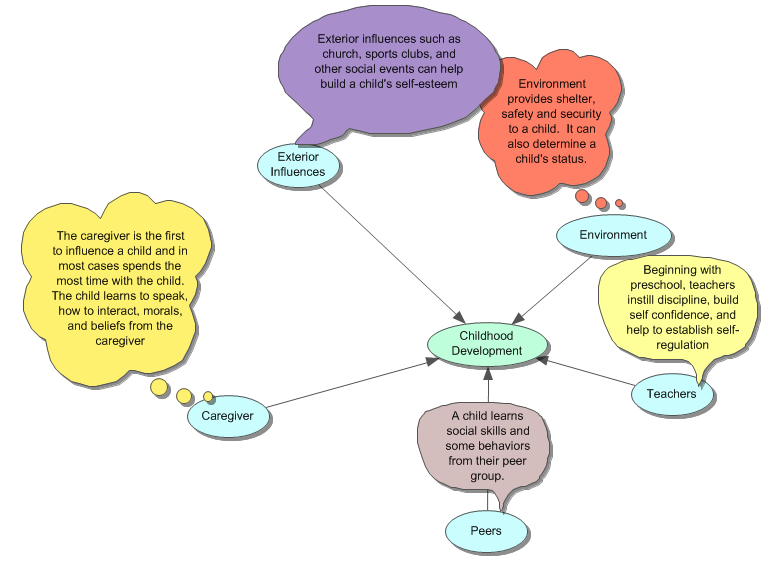
A child’s development is influenced by many factors; Peers, teachers, environment, and other exterior influences can effect a child’s social skill development.  Because a parent (or caregiver) is only part of this development, it is important that the parent do the right things.  A parent must provide a safe and secure environment for the child.  A parent must also instill strong morals and beliefs in the child.  It is also very important that a parent set a good example; the parent must live by good moral standards while raising the child.  


            A teacher can also have an effect in the development of a child’s social skills.  A teacher should help to develop self-regulation by teaching the child when to speak and when to listen.  The teacher can also helped to develop social skills be allowing the child to interact with others.  The teacher should help foster relationships with other children and help a child to understand that being different is not a bad thing.  A teacher can also impact a child’s social skills negatively be allowing a child to act out in class or allow bullying to go unchecked.